
Ketupat: Traditional Indonesian Rice Cake
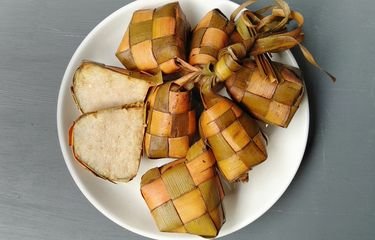
Ketupat is a traditional Indonesian rice cake that is often served during festive occasions and holidays such as Eid al-Fitr, the end of the Islamic holy month of Ramadan. It is also commonly found in other countries in Southeast Asia such as Malaysia, Singapore, and Brunei.
The making of ketupat involves wrapping rice in a diamond-shaped container made of woven palm leaves. The rice is then boiled in water for several hours until it is fully cooked and has taken on the shape of the container. The resulting rice cake is then cut into small pieces and served with various savory dishes such as rendang (spicy meat stew), opor ayam (chicken in coconut milk), and sambal (spicy chili paste).
Aside from being a popular food item during festive occasions, ketupat also holds a symbolic meaning in Indonesian culture. The diamond shape of the ketupat is said to represent harmony and unity, as it is formed by weaving together several strands of palm leaves. In addition, the process of making ketupat requires patience, skill, and cooperation, as it is often done in a communal setting where people work together to prepare large quantities of the rice cakes.
Ketupat also has a historical significance in Indonesian culture. It is said to have originated from the practice of sending rice cakes as a tribute to the ruling powers during the Srivijaya Empire in the 7th century. As time passed, ketupat became a popular food item among the general population and has since become an integral part of Indonesian cuisine.
In recent years, there have been efforts to promote ketupat as a cultural heritage item and to preserve the traditional way of making it. This includes organizing workshops and events where people can learn how to make ketupat using the traditional method of weaving palm leaves.
In conclusion, ketupat is more than just a delicious rice cake. It is a symbol of harmony and unity, a testament to the patience and skill of Indonesian culture, and a reminder of the country’s rich history. Its popularity and significance have made it a beloved food item that continues to be enjoyed by people across Southeast Asia and around the world.

 NirBOOK
please comment
SukaSuka
Sounds savory. I’d love to try it some day 🙂
SukaSuka